Thursday, 13 December 2018

JSON parsing sample


Java Script Object Notation.


Using the org.json library:
JSONObject obj = new JSONObject("{interests : [{interestKey:Dogs}, {interestKey:Cats}]}");

List<String> list = new ArrayList<String>();
JSONArray array = obj.getJSONArray("interests");
for(int i = 0 ; i < array.length() ; i++){
    list.add(array.getJSONObject(i).getString("interestKey"));
}

Daemon threads


thread.setDaemon(true)

If you don't do that, and you run some infinite loop in your thread's run(), that code will keep on executing even after your main application finishes, i.e. it will never let JVM shutdown.


Generally used for helping the main app, as long as main app runs , like GC.


Quick summary : Dead lock and race condition


DEADLOCK:

When :
two threads try to acquire series(two of more) lock in an inconsequential order.

i.e
T1 --> Object1 lock --> sleep for some time(does time consuming tasks) --> Object2 lock.
T2 --> Object2 lock --> sleep for some time(does time consuming tasks)  -> Object1 lock

the problem here is , while both threads are able to acquire some object lock and tries to acquire lock of another object, while still holding the previous object lock.


resolution :
Make sure in your code, all threads acquire the locks in a sequential manner.


T1 --> Object-1 lock --> sleep for some time(does time consuming tasks) --> Object-2
T2 --> Object-1 lock --> sleep for some time(does time consuming tasks) --> Object-2

this way if thread-1 acquire the Object-1 lock, no other threads will be able to acquire the object-1 lock.

and once thread-1 finishes doing his task, may be by acquiring object-1,Object-2 lock, it release all the locks for other threads.


RACE 

Basically, its to do with bad programming of creating a sequence of code, which are not thread safe.
ex:
out of 5 lines of code, 3 lines of code is executed by one thread and cpu scheduler, takes out your thread and allows other thread to run, allowing to change the state of object, then your previous thread come back and tries to read from line 4, assuming the state is unchanged as his last read but thread 2 has changed the state..

example :

One back account, two ATM card holder,
Check then act concept(Check the balance  and then withdraw)


Why String is Immutable


So that , by changing the Object reference , doesn't actually alter the desired behavior , like above.

In above example:
While storing a Key, we passed a String reference variable, which was pointing to "hk" during insertion, so the contract with retriver was make, that you mst use this key to retrieve the object, but suppose after 1 year, one simple line is added after insertion, S1.uppercase(),

If String was mutable, the key in HashCode, would have got changed.

If Java changed the actual value/key of hashtable, while user changes the reference, then if some client does hm.get("hk"), it would give Null, hence undesirable behavior.

Similar issues arises if you use String as some URL, leads to security concerns for your application.

Credits : https://www.youtube.com/watch?v=ZMfMMbEzKE4


Open for extension and closed for modification


 For example, the Collections.sort method knows how to sort everything that implements the Comparable interface. This method is not limited to sorting just integers or just strings — it is not limited to any specific type. If you have a collection of objects that implement the Comparable interface, then you can sort it using the Collections.sort method. The sorting algorithm will work as it was designed, so we can say that it is closed to modification, but the sorting criteria will vary depending on the compareTo method implementation


The alogorithm is closed for modification, its merge sort used in Collection.sort(List<Comparable objects>).

But how your compare your two objects after implementing Comparable and overriding " int compareTo(Object o)" , is open for extension.

Wednesday, 12 December 2018

Monday, 10 December 2018

REST API and http/https


REST call :

Transfer the Representation of resource in a current state.

Always choose/identify the resource first.


Implementation: 
1. Jersey
2. Bboss
3.Java JAX-WS

http://15.154.119.102:8080/nfvd/instance/artifact/query/path?id=26379b81-b522-49a2-b0de-e7ea77f3905f&expression=ORGANIZATION:GENERIC>TENANT:GENERIC

Class level @path: "/instance/artifact";


PathaParam: to reach a specific resource /city/population, /city/weather/

QueryParam: to filter out more of that path, like /city/?name=Bangalore.

There are twi way of design, in generation, you must design in a such way that your path/URL, doesn't change much.


HTTPS :

Credits :
https://www.youtube.com/watch?v=iQsKdtjwtYI


Wednesday, 5 December 2018

Process vs Threads


Process are heavy during context switching, mainly because of "Virtual to physical address translation" in processes which is not required in threads as they share same memory address space


Wednesday, 28 November 2018

Garbage collector process in java

Courtesy : https://www.youtube.com/watch?v=UnaNQgzw4zY


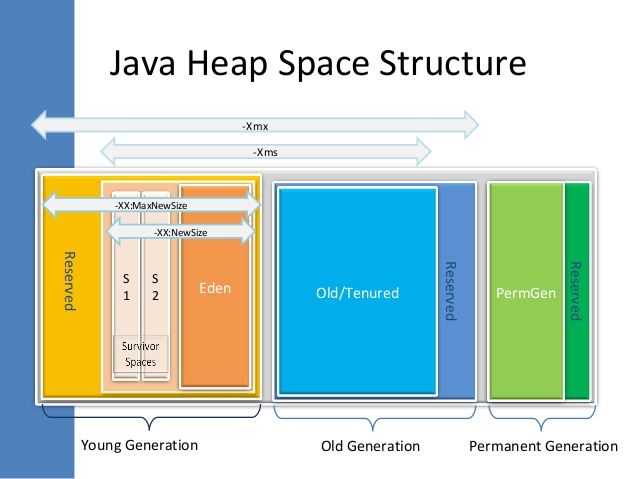
Eden:
All new object

S1: one Eden is full, Minor CG , unrefrenced Eden objected are marked and sweep and later moved(compacted to S1)

So after one minor CG(Eden and S2 will be free)

S2: now when again eden is full, Minor GC kicks in this time on Eden and S1 space,
Unreference object from Eden and S1 are marked and


Serials: STOPS the work
Concurrent: Stops App only for mark step, doenst wait for Old generation to be full, after marking, it runs along with app, performing sweep and compact task

Parallel: uses multiple GC threads, but its stop the world/App, runs only after % of Old generation is full, it stops the app, but uses multple GC,

Best: CMS


ArraLIst Vs Linked List


The difference can be seen in underlying implementation and below time complexity.

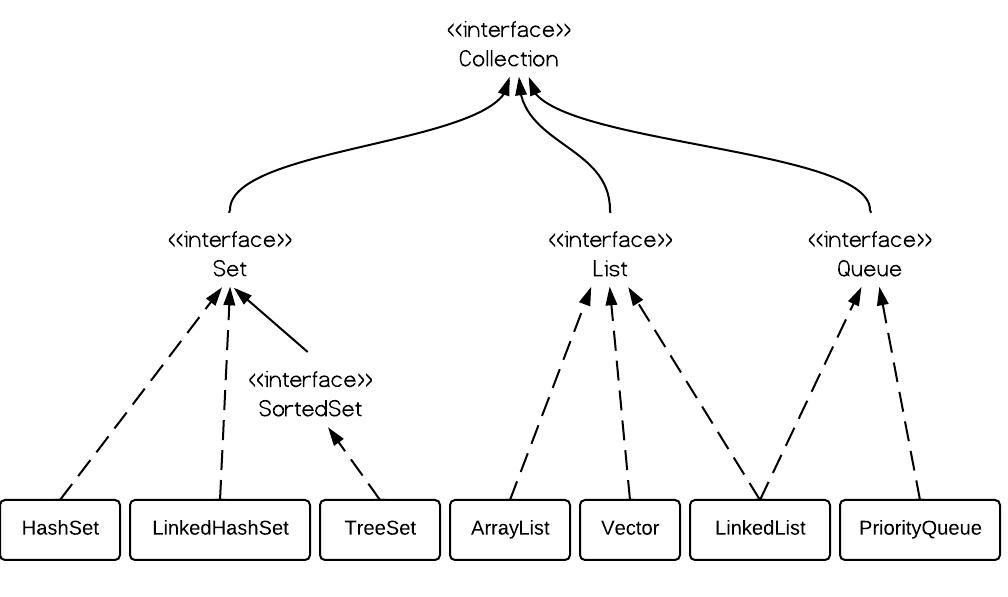
LinkedList also implements Queue, hence gets the properties of Queues, (FIFO),
main difference is in traversal, in LinkedList you have to traverse link by link, hence get operation is
of O(n).

The time complexity comparison is as follows: 
arraylist-vs-linkedlist-complexity


Thursday, 6 September 2018

Mockito : Mock a method level local object


The method to be tested, which internally creates a local Object of MyOtherClass, which can not be set/mocked via Constructor

public class MyClass {
    public someReturn myMethod(){
        MyOtherClass otherClassObject = new MyOtherClass();
        boolean retBool = otherClassObject.otherClassMethod();
        if(retBool){
            // do something
        }
    }
}


So use power Mock, to say, whenever a new object with default contructor is called, use above object,
and you can add any other propery for your mocked object


@RunWith(PowerMockRunner.class)
@PrepareForTest(MyClass.class)  //tells powerMock we will modify MyClass to intercept calls to new somewhere inside it
public class MyClassTest{
    @Test
    public void test(){
          MyOtherClass myMockOtherClass = createMock(MyOtherClass.class);
          //this will intercept calls to "new MyOtherClass()" in MyClass
          whenNew( MyOtherClass.class).withNoArguments().thenReturn( myMockOtherClass ) );          when(myMockOtherClass.otherClassMethod()).thenReturn(true);


   }
Ref : https://stackoverflow.com/questions/29398283/mocking-a-local-object-inside-a-method-of-sut-using-mockito-or-powermocktio?rq=1

Saturday, 25 August 2018

Queue implementation in java


Queue --> Dequeue --> LinkedList

Queue : Only add() from tail and remove() from head (FIFO obviously)


Dequeue: add() and remove() from both the sides methods like addFirst(10),addLast(10),removeFirst(),removeLast().


Notes on LinkedList

1. it maintained all node as 

Node<E> Object attributes{
E item;
Node next;
Node previous;
}

So if you want to implement you own queue/LinkedList,  you should have similars fields

2. remove and add, increase the size field of
Class LinkedList {

int size =0;
Node first/head;
Node last/tail;

}

add(item) {
added to tail, but if head is also null, then head and tail both should point to same.


Sunday, 19 August 2018

Why to override hasCode() and equals() together ?


Lets say your class:

Public Employee {

int empId;

Override only equals()

public boolean equals(Employee other) {

if(this.empId == other.empId) { return true}
else { return false;}

}

You will not face any issues, while using your class , till you start storing your class's object in to any hash implemented collection like HashMap,HashSet etc.


Lets say you want to store you Employee objects in to HashMap.

First lets understand, how HasMap stores the data in it.


Its a Linked List of Linked List
All indexes 0-15 are like linked buckets, then in side each bucket there is another linked list of Map.Entry, for all collision Object with same Bucket Id.


Quick logic of HashMap.put(Key,value)

1.  It first invokes the Key.HashCode() --> say 2001
2. Then tries to find the BucketId/IndexId where it has to place this object --> say divide by n  = 2
3. If next put also result in same bucketId, then that new node will be added to next node of that bucket, line above picture, key4 and key5


Coming back to question again.

Lets your class has only overridden the equals, then each time "new Employee(10)" will produce new Hashcode(Object native memory address , integer representation).

and when you do hashMap.get(new Employee(10), you will never find your object in the map, even though you had added it.

Hence you should provide you unique was of generating hashcode for your class,


Question -2

if you override only HashCode() but not equals

Then suppose your --> new Employee(10) and new Employee(11) goes in to same bucket, then, when you do hasMap.get(new Employee(10)), it will find the bucket, but in the bucket how would find exact object,

becaue inside the bucket each node's "searchedKey.equals(BucketNextkey)" will be invoked, and default implementation of Object's class equal is ==, it check if reference is same,

hence you will never find your Object inside map,even if you has put it.


Monday, 13 August 2018

Threads Creation and Synchronization

Brief

1. A thread can be created either by implementing "Runnable" interface or extending "Thread" class

Inside difference

Thread class internally Implements Runnable interface

and overrides "run" method.

when you call

Thread t = new thread(Runnnable r); --> sets global variable Runnable target = r;

t.start() --> this thread method in Thread class, internally calls local run() and that run method called
target.run().


So if runnable is passed as target, then the class which implements this Runnable.run() will be invoked.

If its thread class is extended , then this target is set as extending class's instance, hence it becames target in run() of thread class.


On Synchronization


Abstract class vs Interface : Use case scenarios


                Abstract class                                                                  Interface 


Most of the properties of these are same, except 

1. Its a class, use "Extends" to inherit it                                         1. Its an interface, use "implements" to inherit it

2. You can have some implement/unimplemented function          2. all functions are bydefault public abstract

3. You can have constructor                                                           3. No constructor allowed


4. Fields/attributes allowed                                                             4. Only constant allowed, Not fields/variable 


Use case scenarios 


                                                                     Interface

1.  To provide some special(HAS-A) capabilities to its all may  be unrelated children, like Employee can be "Serialization"  and Animal can be "Serialization" , after implementing "Serializable" interface both HAS-A property/capability of                 being serialized implementer, 
  
 2. as well as your base has no meaning on it's own
3. You want to define some sort contract/set some fixed behavior/capabilities for all your implementer , walk-able, runnable,flyable etc


                                                                     Abstract

1. IS-A type relation, Dog is Animal, Nano is a Car
2. When you want to reuse the existing code, make inherit properties of you parent and have some of your own.

Thursday, 28 June 2018

Why Static Object and variables never dies


Never dies = Never Garbage collected = Live as long as JVM instance runs

Why never garbage collected ?


Because all Class level details, including all static variable(primitives value and reference values not the actual object actual object will anyway be there in Old/Young gen, only the references ) are
stored in "PermGen" space of Heap.


PermGen :

Holds --> Classloaders objects, which in turn loads classes, hence they hold reference of class they loaded, since statitic variables are references by classes, hence its reference is hold by classloader.

So till the classoader instance itself is destroyed , the static objects lives


When a class loader instance gets GCdown vote
accept
A class in Java can be garbage-collected when nothing references it. In most simple setups this never happens, but there are situations where it can occur.
There are many ways to make a class reachable and thus prevent it from being eligible for GC:
  • objects of that class are still reachable.
  • the Class object representing the class is still reachable
  • the ClassLoader that loaded the class is still reachable
  • other classes loaded by the ClassLoader are still reachable
When none of those are true, then the ClassLoader and all classes it loaded are eligible for GC.

Can permGen data gets garbage collected ? If yes, then Why permGen
TBC